
Introducing the New HBHC Representative, Nathan Reid
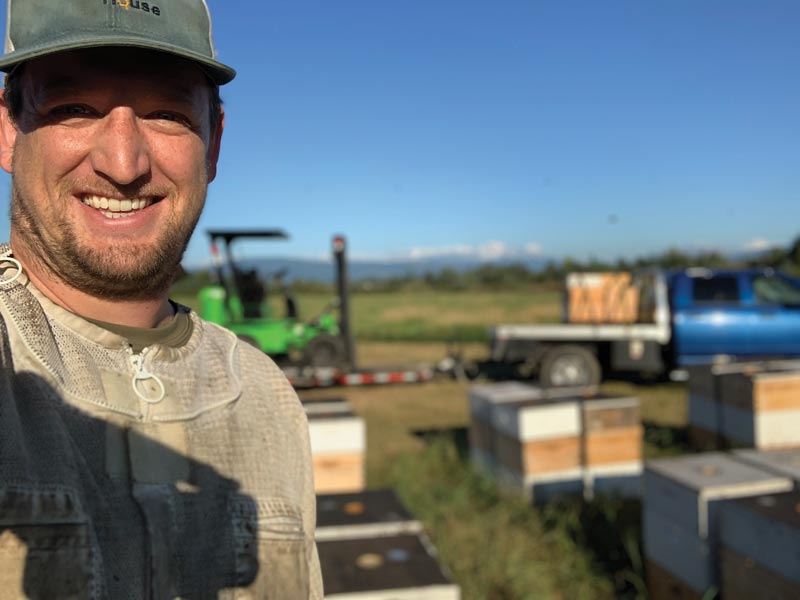
EAS is excited to introduce our new representative to the Honey Bee Health Coalition, Nathan Reid. Nathan is a lifelong beekeeper with over 15 seasons of hands-on research and commercial experience in honeybee management. In 2017, he embarked on a migratory career across the United States, managing colonies for honey production and pollination. A proud member of the Eastern Apicultural Society for 9 years, Nathan has had the privilege of collaborating with leading beekeepers and research institutions, honing his skills as a field technician and gaining deep expertise in the industry.
Passionate about bridging the gap between science and practice, Nathan is dedicated to translating research into actionable solutions that improve honeybee health and productivity. He champions best management practices, striving to advance the industry’s understanding of honeybee health and sustainability.
Nathan Reid
HBHC EAS Representative
I’m humbled to serve as your EAS representative on the Honey Bee Health Coalition (HBHC) and am excited to share a few updates from our recent meeting. This global gathering of members truly showcased the Coalition’s diversity and immense talent. (For additional details, please visit the HBHC website.)
In 2024, the HBHC worked on several key initiatives:
- Facilitating the North American Bee Health Strategy
- Delivered new resource guides on Tropilaelaps mites
- Assisted APHIS and U.S. beekeepers in providing comments to the Canadian Food Inspection Agency (CFIA) about package bee imports
- Worked with U.S. government agencies and beekeepers to register new, effective varroacides
- 9th edition of the “Tools for Varroa Management” guide – to be released early 2025
- Released a Bee Nutrition Guide for supplements
- Delivered guidelines for pollinator-friendly utility-scale solar projects
- Updated Farm Bill recommendations and advised the USDA on improving forage in federal conservation programs
- Convened experts to address the science behind native and managed bee interactions
The HBHC website remains the best resource for further details. At the close of the meeting, our colleague and chairman, Matt Mullica, highlighted the Coalition’s unique ability to pivot quickly and tackle emerging concerns. This agility is vital in ensuring we can continue to deliver high-impact projects, unite researchers, advise government agencies, and work with the beekeeping industry to confront ongoing and emerging challenges. Please use this link for immediate access to updates: honeybeehealthcoalition.org.
Spring 2025 Update
How fortunate we are as an industry, to have world-class experts who can mount a swift response to unexpected challenges. By now you may have heard that some “1.6 million colonies were lost” this past winter creating yet untold economic impacts on Beekeepers and Farmers.
The official causes are yet unconfirmed, but as of April 3rd, survey results through Project Apis M. have reached some 800+ beekeepers, representing almost 2 million hives. [Insert latest survey responses link here]
When reports started rolling in back in January, “…USDA Bee Labs were among the first to receive reports of these severe losses. To address the crisis, a multi-organizational working group—including Project Apis m., the American Beekeeping Federation, and the American Honey Producers Association—swiftly mobilized to assess the scale and severity of the losses, collect critical management data, and guide research efforts to identify potential causes.” said Danielle Downey, executive director of Project Apis m.
The USDA-ARS and university labs across the nation are analyzing potential contributing factors, such as:
- Varroa mite resistance to amitraz, commonly used to manage Varroa mites.
- Environmental factors, including weather conditions affecting colony health.
- Management factors such as queen replacement, supplemental nutrition and winter
- management.
- Chemical exposures, including interactions between pesticides and bee immunity.
The Honey Bee Health Coalition serves in a facilitative role at a time like this. Bringing beekeepers together with other industry stakeholders and helping to coordinate the message to the press. (It’s been a tough season to break into the news cycle!)
There will be a time for collaborative and actionable solutions, but we must first understand what we’re truly up against. “These findings will be critical in helping beekeepers make informed management and operational decisions as they navigate rebuilding their businesses. We are grateful for the urgency and dedication shown throughout this process.” said Steven Coy, President of the American Honey Producers Association.
So we’ll wait for the analysis before drawing conclusions but there are many who wouldn’t be surprised if it was – a little bit of everything.
Fall 2025 Update
I’m writing to provide a brief update on my activities as your representative to the Honey Bee Health Coalition (HBHC).
Since my appointment, I’ve:
- Joined the HBHC Steering Committee, helping guide the coalition’s research and communications strategy.
- Participated in multiple stakeholder and committee meetings, including those addressing the 2024–2025 colony losses and Varroa resistance.
- Authored two articles for the EAS Quarterly Magazine highlighting HBHC’s work and the industry’s coordinated response to current challenges.
Key HBHC initiatives this year include:
- Vital assistance with response to the Industry’s overwinter losses in 24’-25’
- Upcoming 9th Edition of the Tools for Varroa Guide, currently in revision.
- Expanded work on forage and nutrition, including solar-based habitat and a new U.S. Bee Nutrition Guide.
- Ongoing efforts to correct misinformation around managed vs. native bee competition.
- A coordinated response to massive winter colony losses, including a published FAQ and collaborative research underway.
EAS’s involvement ensures our voice is part of shaping national priorities in bee health.
In a more informal tone, these are the broad strokes as I see it:
- Media Messaging Challenges: HBHC (and similar orgs) are struggling to break through in the current media landscape. The challenge isn’t reaching beekeepers—it’s reaching policymakers and the general public. That said, we could help circulate more HBHC content to our members.
- Upcoming In-Person Meeting (Colorado – early October): It’ll be a one-day event. HBHC can’t fund travel for guest researchers but is still extending invitations. If EAS were in a position to sponsor one additional East Coast researcher or expert—especially from a state/federal agency or within our own network—it would really strengthen the room.
- Area-Wide Management Program (AWMP): Through APHIS, the aim is to assist with miticides so the (financial) burden isn’t entirely on the beekeeper. This has been at the center of every steering committee meeting and taking shape during the last 7 months. The Almond board is interested in helping to set this up as this would be conducted during and in almond pollination. In short- they are attempting to field trial a novel varroa management strategy – that is yet to be determined. Though a pilot program launched this summer with 10 commercials in the Dakotas and Florida. This was setup in collaboration with the Baton Rouge lab. That’s why the October meeting is important, to educate the industry about the AWMP, build political support.
- Urgency & Fragility of Our Response Capacity: With BIP gone and USDA researchers increasingly silenced or defunded, HBHC and Project Apis m. are essentially all we’ve got for coordinated response and communication.
If there’s ever been a time to rally support—through fundraising, outreach, or simply awareness—it’s now.